
3 ways technology helps managers build a high performance culture
3 ways technology helps managers build a high performance culture
3 ways technology helps managers build a high performance culture
3 ways technology helps managers build a high performance culture
People don't leave companies, they leave managers — and managers fail because no one gives them the conditions to succeed. How the right technology protects the human relationship instead of replacing it.
People don't leave companies, they leave managers — and managers fail because no one gives them the conditions to succeed. How the right technology protects the human relationship instead of replacing it.

Blogs on people, performance & growth
Blogs on people, performance & growth
Blogs on people, performance & growth
Blogs on people, performance & growth

Andrew Heath
Andrew Heath
People do not leave companies. They leave managers.
And managers do not fail because they do not care. They fail because nobody gave them the conditions to succeed.
The best managers in the world share one thing. They show up consistently for the people who report to them. Not occasionally. Not when things go wrong. Every week, in a conversation that is focused, honest and genuinely useful.
Most managers want to do this. Very few have the time, the structure or the clarity to do it well.
That is the problem worth solving.
Not with more training. Not with another framework. But by removing the friction that stands between a manager and the conversation that changes everything.
Technology, used well, does exactly that.
Not by replacing the human relationship. By protecting it.
1. It shows managers exactly where their time will have the biggest impact
Great managers do not manage everyone the same way. They know where attention is needed.
The problem is that most managers are flying blind. They respond to whoever is loudest. They focus on the most recent problem rather than the most important one. They miss the quiet drift that eventually becomes something much harder to fix.
This is not their fault. It is a visibility problem.
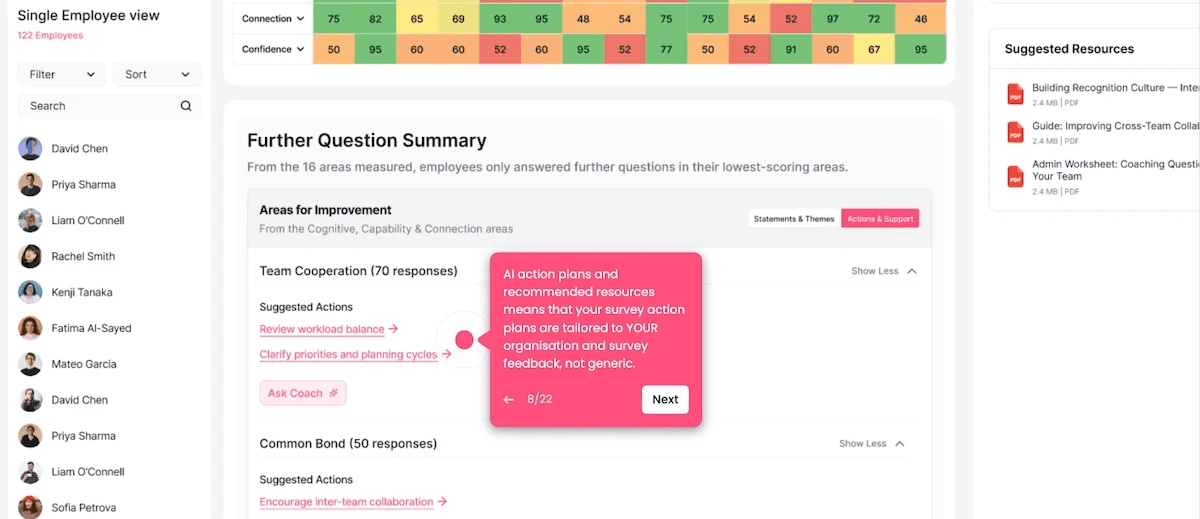
When technology surfaces where a team is thriving and where it is starting to stall, something shifts. The manager stops guessing. They arrive at every conversation knowing what actually matters this week.
That is not a small thing. That is the difference between a manager who reacts and a manager who leads.
2. It drafts the agenda so the manager can focus on the conversation
The one-to-one is the most important thing a manager does. It is also the easiest thing to get wrong.
Without a structure, it becomes a status update. Both people leave with no clear sense of what has changed. The real conversation never happens.
The real conversation is the one where someone feels heard. Where a problem gets named that has never been said out loud before. Where trust deepens slightly and performance follows.
That conversation requires presence. And presence is hard when you are also trying to remember what you wanted to cover.
When technology drafts the agenda, the manager arrives ready. Not to follow a script. To listen.
That is the shift. From managing the meeting to being in it.
3. It captures the actions so the conversation leads somewhere
A great conversation that leads to nothing is worse than no conversation at all.
Because it builds expectation and then breaks it. The team member walks away thinking something will change. It does not. The next meeting starts in the same place as the last one. Slowly, trust erodes.
The most consistent high performing teams are not the ones with the best strategy. They are the ones where what gets said actually happens.
When technology captures the commitments made in a conversation and turns them into clear goals and actions, continuity becomes the default. Each meeting builds on the last. Progress is visible. The team member knows they were heard.
That signal, repeated week after week, is what builds a culture.
Not a policy. Not a values statement. A hundred small moments of follow-through.
A tool. Not a subsititute.
None of this replaces the manager.
It gives the manager back the thing that matters most. The ability to show up fully for the people who need them.
The human relationship is still entirely human. Technology just removes everything that was getting in the way of it.
And when managers can do that consistently, at scale, across every team in the organisation, something remarkable happens.
Performance stops being a problem to solve. It becomes a culture that takes care of itself.
Looking for a tool to deliver this?
See how RoleKick supports managers to lead better conversations and build high performance teams.
People do not leave companies. They leave managers.
And managers do not fail because they do not care. They fail because nobody gave them the conditions to succeed.
The best managers in the world share one thing. They show up consistently for the people who report to them. Not occasionally. Not when things go wrong. Every week, in a conversation that is focused, honest and genuinely useful.
Most managers want to do this. Very few have the time, the structure or the clarity to do it well.
That is the problem worth solving.
Not with more training. Not with another framework. But by removing the friction that stands between a manager and the conversation that changes everything.
Technology, used well, does exactly that.
Not by replacing the human relationship. By protecting it.
1. It shows managers exactly where their time will have the biggest impact
Great managers do not manage everyone the same way. They know where attention is needed.
The problem is that most managers are flying blind. They respond to whoever is loudest. They focus on the most recent problem rather than the most important one. They miss the quiet drift that eventually becomes something much harder to fix.
This is not their fault. It is a visibility problem.
When technology surfaces where a team is thriving and where it is starting to stall, something shifts. The manager stops guessing. They arrive at every conversation knowing what actually matters this week.
That is not a small thing. That is the difference between a manager who reacts and a manager who leads.
2. It drafts the agenda so the manager can focus on the conversation
The one-to-one is the most important thing a manager does. It is also the easiest thing to get wrong.
Without a structure, it becomes a status update. Both people leave with no clear sense of what has changed. The real conversation never happens.
The real conversation is the one where someone feels heard. Where a problem gets named that has never been said out loud before. Where trust deepens slightly and performance follows.
That conversation requires presence. And presence is hard when you are also trying to remember what you wanted to cover.
When technology drafts the agenda, the manager arrives ready. Not to follow a script. To listen.
That is the shift. From managing the meeting to being in it.
3. It captures the actions so the conversation leads somewhere
A great conversation that leads to nothing is worse than no conversation at all.
Because it builds expectation and then breaks it. The team member walks away thinking something will change. It does not. The next meeting starts in the same place as the last one. Slowly, trust erodes.
The most consistent high performing teams are not the ones with the best strategy. They are the ones where what gets said actually happens.
When technology captures the commitments made in a conversation and turns them into clear goals and actions, continuity becomes the default. Each meeting builds on the last. Progress is visible. The team member knows they were heard.
That signal, repeated week after week, is what builds a culture.
Not a policy. Not a values statement. A hundred small moments of follow-through.
A tool. Not a subsititute.
None of this replaces the manager.
It gives the manager back the thing that matters most. The ability to show up fully for the people who need them.
The human relationship is still entirely human. Technology just removes everything that was getting in the way of it.
And when managers can do that consistently, at scale, across every team in the organisation, something remarkable happens.
Performance stops being a problem to solve. It becomes a culture that takes care of itself.
Looking for a tool to deliver this?
See how RoleKick supports managers to lead better conversations and build high performance teams.
Strategy execution for high-growth teams, in your inbox
Strategy execution for high-growth teams, in your inbox
Practical writing on people, performance and delivering strategy.
FAQs
FAQs
Clarity on what RoleKick does, how it fits, and why it works.
Clarity on what RoleKick does, how it fits, and why it works.
Get the visibility your HR platforms don't give you
Get the visibility your HR platforms don't give you
Get the visibility your HR platforms don't give you
Get the visibility your HR platforms don't give you
See your strategy cascade into goals — and exactly where execution is on track or at risk.
See your strategy cascade into goals — and exactly where execution is on track or at risk.
For companies with 50–500 employees. No obligation.